
Policy Tailwinds Are Here: Forging the "Soul of Resilience" for Cities with Digital Twin Technology
2025-12-24Preface
Recently, a crucial plan concerning the safety of future urban life has been released! Nine departments, including the Ministry of Housing and Urban-Rural Development, jointly issued the Action Plan for Implementing the 'Opinions of the General Office of the CPC Central Committee and the General Office of the State Council on Promoting New Urban Infrastructure Construction to Build Resilient Cities' (2025–2027), clarifying that China will comprehensively advance the construction of resilient cities over the next three years.
The Shift in Urban Governance from "Treating Illnesses" to "Preventing Them"
The introduction of the Action Plan signifies a major shift in China's philosophy of urban safety construction. The safety of future cities must be built upon precise data analysis and scientific prediction and early warning.
1. A More Forward-Looking Vision: Transitioning from post-disaster rescue to pre-disaster prevention, and from post-incident response to risk management.
2. A More Systemic Approach: Breaking down departmental barriers to achieve coordinated multi-system collaboration involving emergency management, fire rescue, earthquake early warning, and more.
3. More Intelligent Methods: Leveraging new technologies like digital twins to make urban safety decision-making more scientific and precise.
Building the "Digital Foundation" and "Intelligent Brain" for Resilient Cities
GridWorld has been deeply involved in core technologies of 3D geological modeling and visualization for years. Its solutions are highly aligned with the technical requirements of the Action Plan and play a vital role in the following key areas:
1. Builder of a Comprehensive, High-Precision "Digital Foundation": The analysis and decision-making for resilient cities must be based on authentic and detailed urban data. GridWorld's technology can efficiently process comprehensive, multi-source heterogeneous data, including above-ground buildings, underground pipelines, transportation facilities, and geological structures, to build city-scale digital twin models with centimeter or even millimeter-level accuracy. This is equivalent to creating a 1:1 "digital sandbox" for the city, leaving hidden risks nowhere to hide.
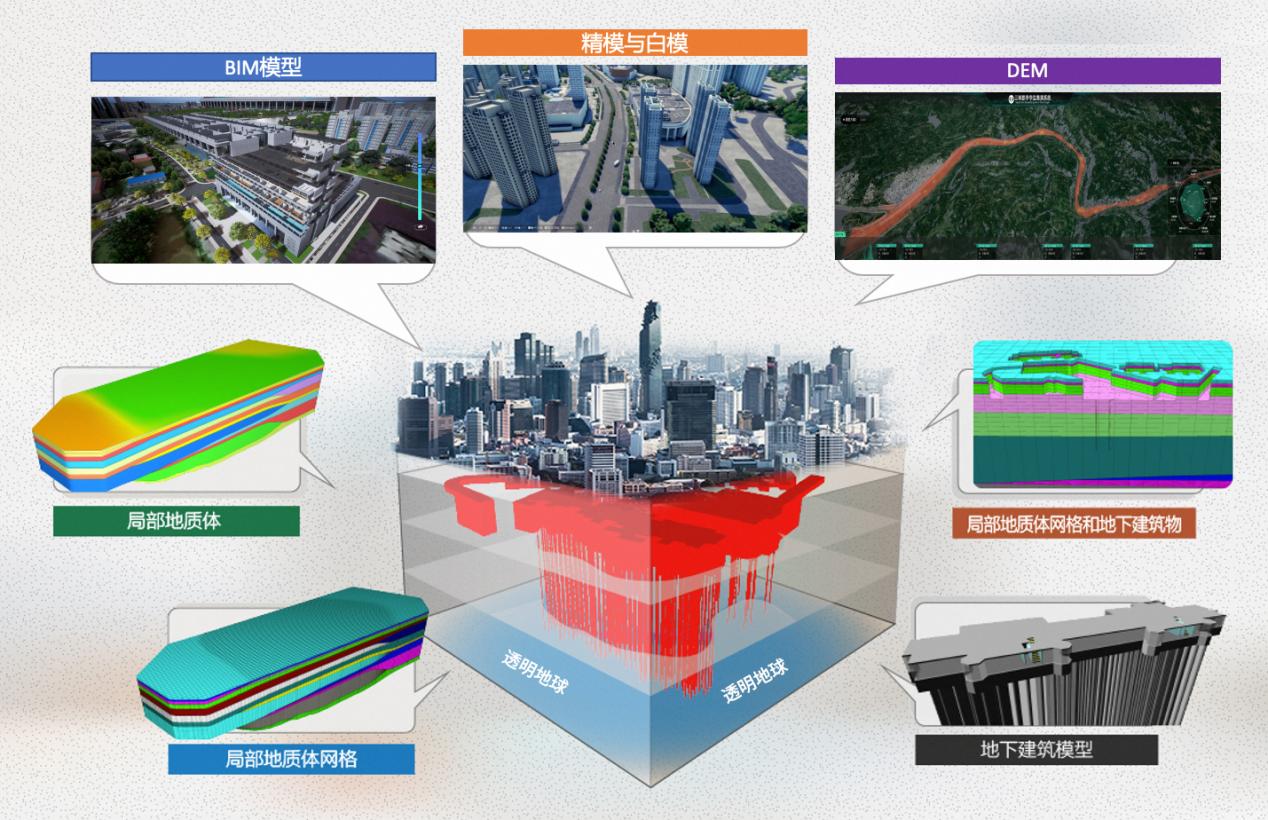
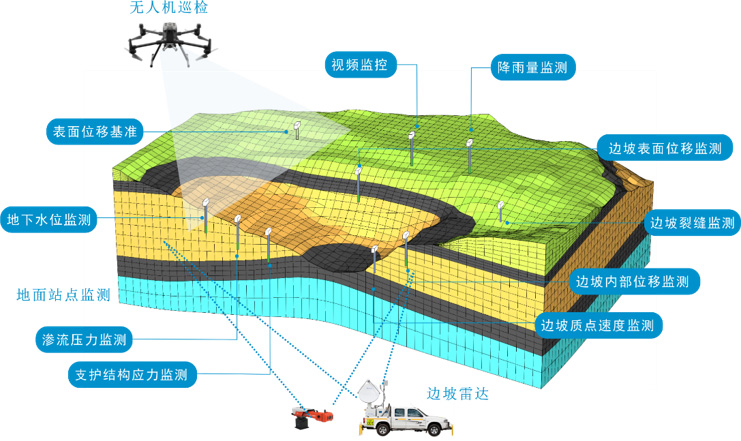
2. The "Simulator" of Urban Comprehensive Risks: With an accurate digital foundation, the next step is simulation and analysis. GridWorld's platform can integrate multi-dimensional data such as geology, meteorology, population, and hazard sources to "pre-simulate" various disaster scenarios like earthquakes, floods, and fires in a virtual space.
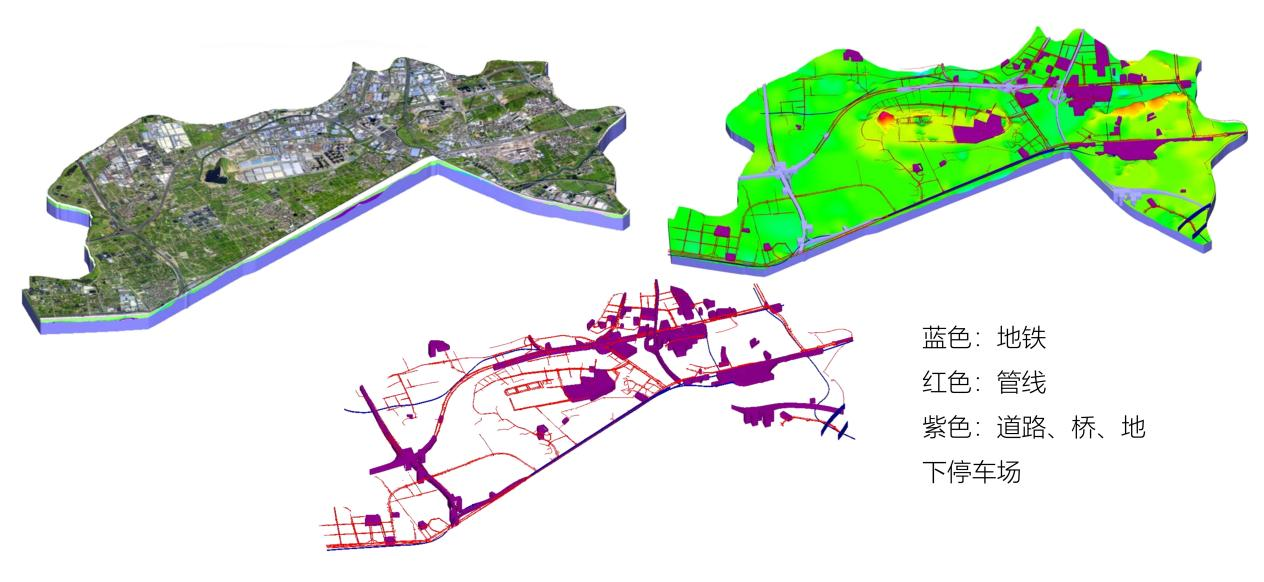
3. The "Intelligent Manager" for Lifeline Engineering and Shelter Spaces: The Action Plan specifically emphasizes the coordinated utilization of above-ground and underground spaces. GridWorld's technology enables 3D visual management of a city's "lifelines" (such as water pipes, gas pipelines, etc.) and facilitates integrated analysis with shelters and evacuation routes. It bridges information between above-ground and underground, enabling spaces like subways and civil defense works to quickly and safely transform into life-saving passages and shelters during disasters.
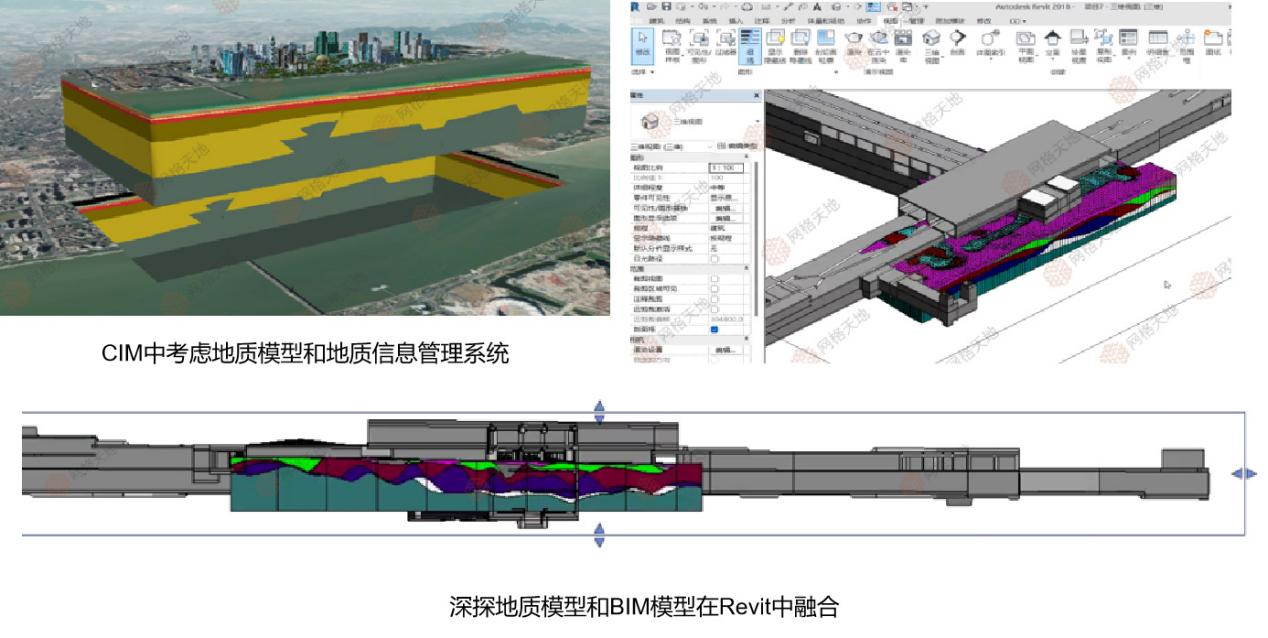
4. The "Seamless Connector" from BIM to CIM: The Action Plan calls for promoting the integration and linkage of BIM and CIM platforms. GridWorld provides the key technology for this "integration," seamlessly incorporating detailed BIM models of individual buildings into the macroscopic CIM city model. This achieves complete digitization from "cell" to "organism," ensuring that risk assessment and emergency management can be grasped both macroscopically and microscopically.
The clarion call for advancing toward "resilient cities" has sounded. GridWorld, as a core technology provider in China's urban digital twin domain, is ready to collaborate with governments at all levels and industry partners. We aim to transform our algorithms, models, and platforms into an "impregnable fortress" and an "intelligent brain" that safeguards urban safety, making cities more resilient and life more secure.